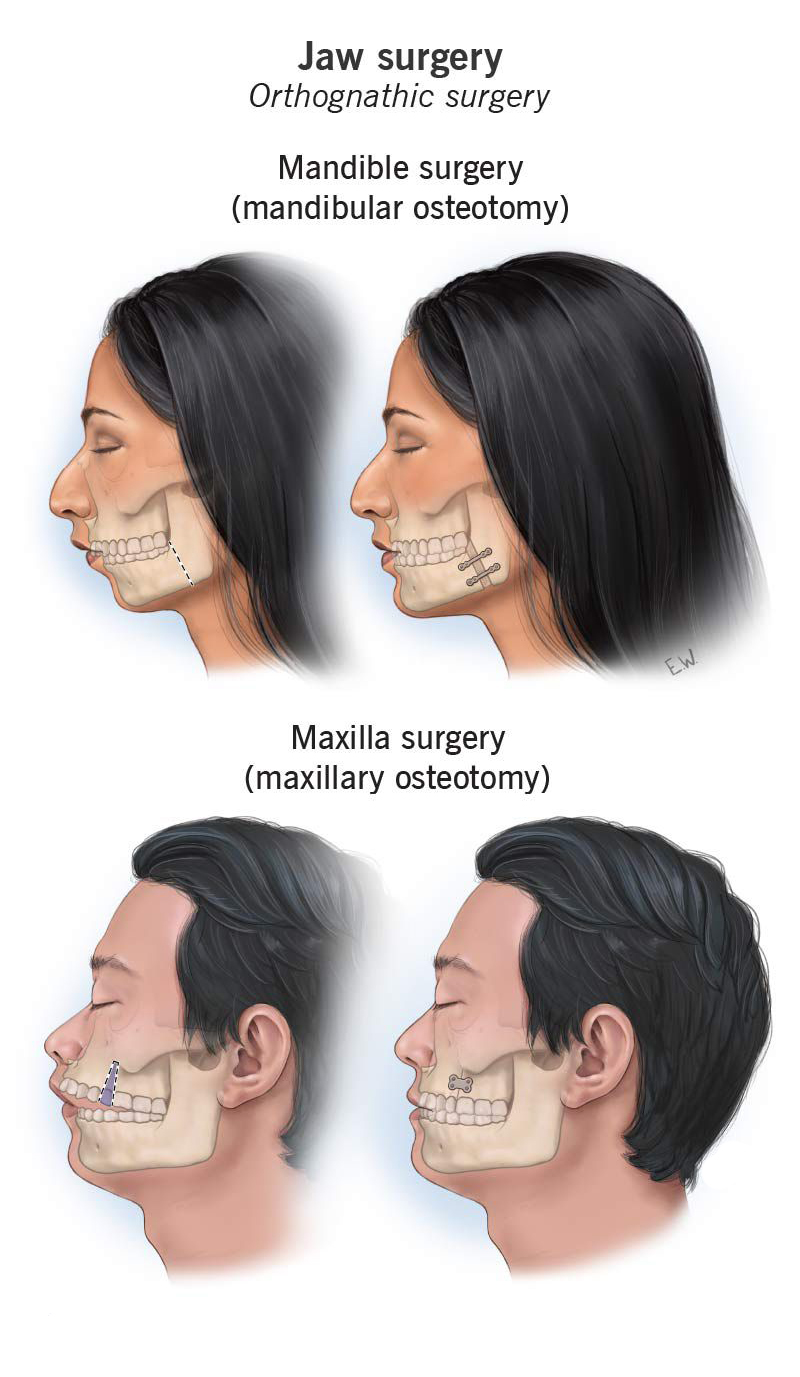
What is jaw surgery?
Corrective jaw surgery (orthognathic surgery) changes the structure of your jawbone and brings your upper and lower jaws into proper alignment. Misaligned jaws can negatively impact your bite and make eating and speaking more difficult.
Jaw surgery isn’t a single event. It’s a two- to three-year process that combines surgery and orthodontics. Specifics vary for everyone, but here are the basics:
Types of jaw surgery
The three main types of corrective jaw surgery are:
Maxilla surgery (maxillary osteotomy): Used when your upper jaw sticks out too much or too little.
Mandible surgery (mandibular osteotomy): Necessary when your lower jaw sticks out too much or too little.
Double jaw surgery (bimaxillary osteotomy): Recommended when you have a condition that affects both jaws.
What conditions does jaw surgery treat?
Oral and maxillofacial surgeons or other head and neck surgeons use jaw surgery to treat:
• Broken jaws
• Cleft lip and palate
• Jaw cancer
• Jaw cysts and tumors
• Malocclusion (including overbite, overjet and underbite)
• Obstructive sleep apnea (OSA)
• Prognathism (when one or both of your jaws stick out)
• TMJ (temporomandibular joint) disorders
• Undersized or oversized jaws
You might need jaw reconstruction surgery after an accident or injury. This procedure may involve placing jaw implants to restore your appearance.
Risks / Benefits
What are the benefits of jaw surgery?
Orthognathic surgery can correct conditions that nonsurgical treatments can’t. For example, braces can move your teeth into new positions. But they can’t move your jaw or change its shape.
Jaw surgery is a complex procedure. But it’s the only way to change the skeletal structure of your mouth.
How successful is jaw surgery?
Orthognathic surgery has a success rate of around 93.9%. Most people who have it report an improved quality of life.
What are the risks or complications of jaw surgery?
Like any major surgery, corrective jaw surgery comes with risks and possible complications.
General risks after surgery are:
• Excessive bleeding
• Infection
• Reaction to anesthesia
Complications specific to jaw surgery could include:
• Dental damage
• Difficulty opening your mouth as wide as you’d like
• Jaw pain
• Lingering numbness around your mouth after surgery
• Scarring
What can I expect during recovery?
Here are some tips that can help during jaw surgery recovery:

Don’t forget your splint. Your healthcare provider will give you a splint to help your mouth muscles adjust to your new jaw position.

Elevate your head. Using pillows to prop up your head will help reduce facial swelling.

Ice your jaw. You’ll need to keep ice packs on your outer jaw over the first 24 hours. Apply the ice pack for 20 minutes on, 10 minutes off, then repeat as needed.
Keep your orthodontic appointments. If you have braces, you’ll continue wearing them for six to nine months after surgery. You’ll need regular follow-ups during this time.
Stick with a soft diet. Balanced meals are especially important during recovery. Ask your surgeon how to include nutrient-rich foods in your diet.
Take your meds as prescribed. Your healthcare provider will prescribe medication to reduce your risk of pain and infection.
Wear your retainer. After your braces come off, you’ll need to wear a retainer to keep your teeth in their new positions.
Birth defect such as Cleft palate , Cleft lip & other associated defect of the face & skull,
Apart from this, people who want to enhance their facial appearance can be considered.