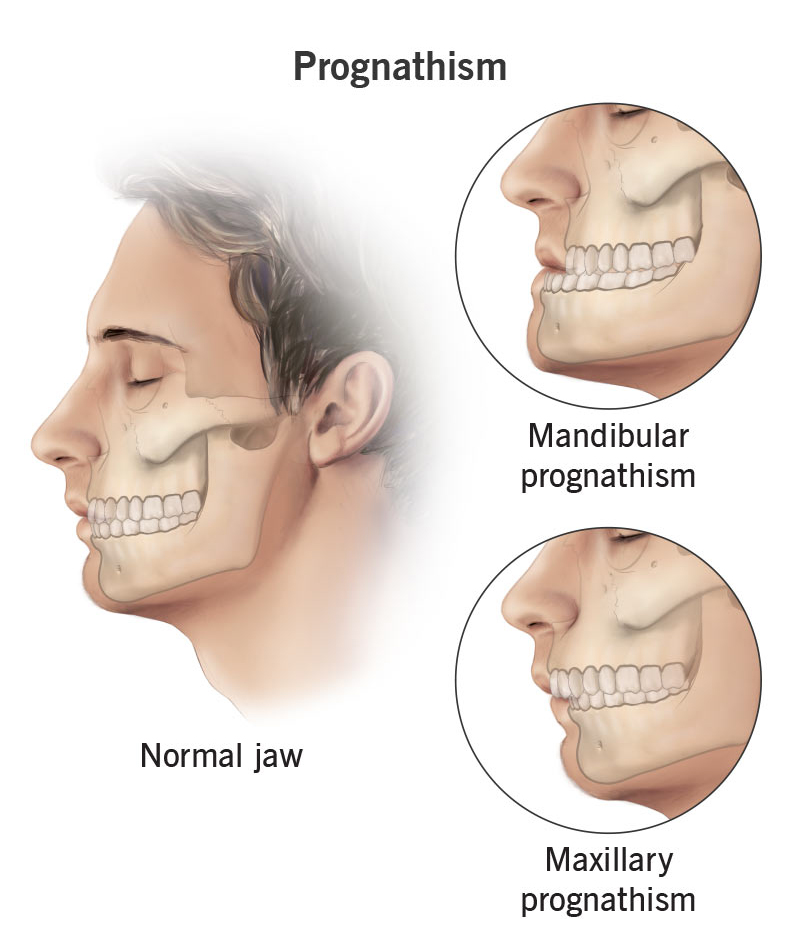
What is a Protruding Upper or Lower Jaw?
A protruding jaw is a condition where the upper jaw (maxilla) or lower jaw (mandible) extends significantly forward compared to the rest of the facial structure. This can affect facial balance, bite alignment, speech, chewing efficiency, and overall appearance. The condition may be present from birth or develop during growth and can vary in severity from person to person.
What Causes a Protruding Upper or Lower Jaw?
• Genetic and hereditary factors.
• Abnormal jaw growth during development.
• Congenital facial and skeletal conditions.
• Bite irregularities and dental misalignment.
• Growth discrepancies between the upper and lower jaws.
How Can a Protruding Jaw Affect Daily Life?
A protruding upper or lower jaw can affect both facial appearance and everyday oral functions. Individuals may experience difficulty in chewing and biting food properly due to misalignment of the jaws and teeth. The condition can also lead to speech and pronunciation challenges, making certain words difficult to articulate clearly.
Improper bite alignment can cause excessive wear on teeth over time, potentially leading to additional dental concerns.


