What is snoring?
Vibration of respiratory structures and the resulting sound due to obstructed air movement during breathing while sleeping.
What are the causes of Snoring?
• Throat weakness, causing the throat to close during sleep.
• Mal positioned jaw, often caused by tension in the muscles.
• Obesity that has caused fat to gather in and around the throat.
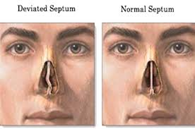
• Obstruction in the nasal passageway.
• Obstructive sleep apnea.
• Sleep deprivation.
• Sleeping on one's back, which may result in the tongue dropping to the back of the mouth.
Will it affect our normal Life Style?
Yes In some cases, the sound may be soft, but in most cases, it can be loud and unpleasant. Snoring during sleep may be a sign, or first alarm, of obstructive sleep apnea.
Though snoring is often considered a minor affliction, snorers can sometimes suffer severe impairment of lifestyle. Significant improvement in marital relations after snoring was surgically corrected.
New studies associate loud "snoring" with the development of carotid artery atherosclerosis. Snoring vibrations are transmitted to the carotid artery, identifying a possible mechanism for snoring-associated carotid artery damage and atherosclerotic plaque development and consequently ischemic stroke.
What are signs of snoring?
• Snoring is known to cause sleep deprivation to snorers and those around them,
• drowsiness.
• Irritability.
• Lack of focus and decreased sexual desire.
• It has also been suggested that it can cause significant psychological and social damage to sufferers.
What happens during Snoring?
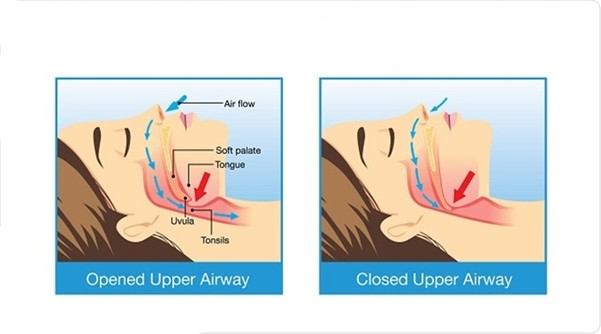
Snoring is caused by a partially closed upper airway (the nose and throat). When this happens, it means that a person isn’t taking in enough oxygen for the body to perform its important functions. The brain then sends a signal to the body to wake up to get the oxygen it needs, likely resulting in the person waking up throughout the night without realizing it.
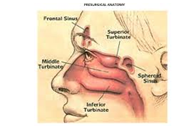
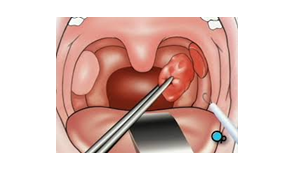
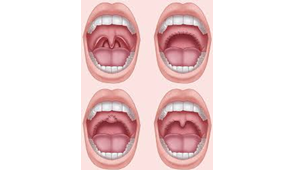
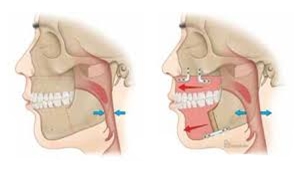
Closure of upper airway may be due to blockage of air flow when air enters lungs. Obstruction may be present in the nose, upper jaw, Lower jaw or involving all the structures.
Will it affect our normal Life Style?
Yes In some cases, the sound may be soft, but in most cases, it can be loud and unpleasant. Snoring during sleep may be a sign, or first alarm, of obstructive sleep apnea.
Though snoring is often considered a minor affliction, snorers can sometimes suffer severe impairment of lifestyle. Significant improvement in marital relations after snoring was surgically corrected.
New studies associate loud "snoring" with the development of carotid artery atherosclerosis. Snoring vibrations are transmitted to the carotid artery, identifying a possible mechanism for snoring-associated carotid artery damage and atherosclerotic plaque development and consequently ischemic stroke.