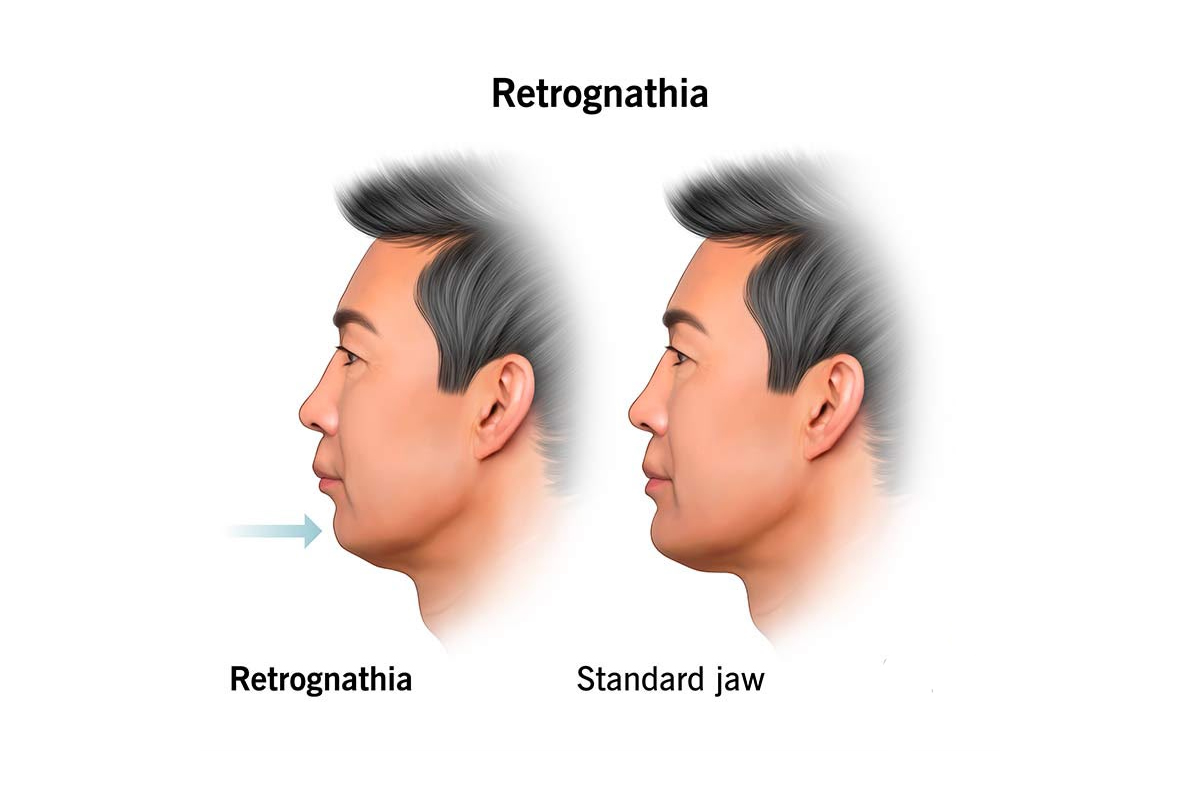
What is a Retrognathic Upper / Lower Jaw?
A Retrognathic Upper or Lower Jaw is a condition in which the upper jaw (maxilla) or lower jaw (mandible) is positioned further back than its ideal anatomical position. This can affect facial balance, jaw function, bite alignment, and overall facial aesthetics. Depending on the severity, the condition may cause a recessed facial profile, difficulty in chewing, speech concerns, and functional limitations.
What Causes a Retrognathic Jaw?
• Genetic and hereditary factors.
• Abnormal jaw growth during development.
• Congenital facial and skeletal conditions.
• Developmental discrepancies between the upper and lower jaws.
• Growth disturbances affecting facial structure.
Why is Early Diagnosis of a Retrognathic Jaw Important?
Early diagnosis helps identify jaw growth discrepancies before they lead to more significant functional and aesthetic concerns.
Timely evaluation allows specialists to develop a personalized treatment plan that can improve jaw alignment, facial balance, and overall oral health.


